Table Of Content

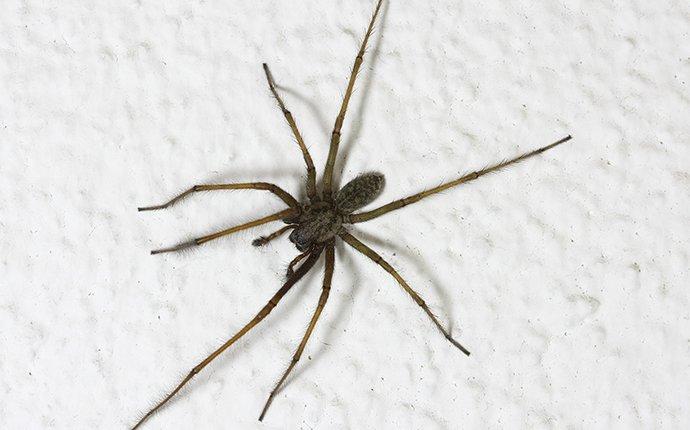
Additionally, the toxins in the venom aren’t dangerous to humans. The common house spider female is 5 to 6 millimeters in length with a yellowish-brown carapace and a dirty-white to brown abdomen with gray chevrons. The legs are yellow, with darker rings at the end of each segment. Some individuals have a triangular black spot on the top of the abdomen.
Most Common Types of House Spiders in the U.S.

Usually, harvestmen are small, with their bodies not growing more than 0.28” (7 mm) long. However, they have a characteristic large leg span, sometimes up to 6.3” (160 mm) in length. Usually, noticing a hobo spider in the home causes panic because there are incredibly agile, swift-moving spiders. Since spiders are often found trapped in sinks or tubs, many people assume that's how they got inside. But modern drains feature sediment traps that would prevent spiders from passing, Crawford points out.
Common House (Parasteatoda tepidariorum)
Should I kill spiders in my home? An entomologist explains why not to - The Conversation
Should I kill spiders in my home? An entomologist explains why not to.
Posted: Wed, 16 May 2018 07:00:00 GMT [source]
Jumping spiders, however, are not dangerous and are actually beneficial, as they enjoy hunting and pouncing on nuisance insects. Common house spiders spin webs that are made from thin silk strands. There are several ways to tell a common house spider's web from other species' webs. For one, common house spiders usually spin one part of the web to be thicker than the rest. In addition, common house spiders like to add a leaf or two to the web so they can hide. Brown recluse spiders are a species of venomous house spiders commonly found indoors.
Cobweb Spiders
If you suspect the spider you're seeing is a brown spider, give it space. Luckily, they are not aggressive and are not likely to bite unless pinned against skin. It is most common for brown recluse bites to happen on the arms, hands, and feet while getting dressed or cleaning storage areas. These bites can often go undetected until hours later when the discomfort sets in. If you have noticed dirty cobwebs in the corners of your walls, they could have been left by a common house spider. These dust-covered cobwebs can easily be vacuumed up or swept down without fear of coming in contact with a spider.
Widow Spiders
While Russell says these spiders “may bite in defense,” it shouldn’t cause any issues for you. You’ll often find harvestmen in sheds, garages, basements, and crawl spaces. Jumping spiders are usually found near windows and doors as they hunt for small insects to consume. The juvenile spiders hatch within a span of 7 to 10 days after which they gradually disperse.
The cellar spider also goes by common names like vibrating spiders, carpenter spiders, and daddy long-legs spider. However, the name daddy long-legs is also given to other arthropods like harvestmen and crane flies. You’ll often find the black house spider lurking in wall crevices, crawl spaces, behind baseboards, and window frames.
Removing Common House Spiders
Perhaps the most common strategy involves trapping a spider in a cup and releasing it outside, where it can presumably return to its natural lifestyle. This is a noble sentiment (and often requires quick reflexes), but as Crawford explains, it may not achieve the desired result if the arachnid is a true house spider. "They usually spend their entire life cycle in, on or under their native building." Funnel weavers, including the hobo spider, are part of the family Agelenidae and are most noticeable in the fall when their dew-covered webs are visible in the morning hours.
In Fact, House Spiders Can Be Helpful
They can randomly attack grasshoppers, butterflies, cockroaches or other spiders depending on their size. If the prey is too agile, the spider will try shooting web at it from a distance before pulling the thread toward itself. Bigger females can also attract baby skinks inside their web by leaving fly remains hanging in it. Once its food dries out, the spider usually drops it to the floor in order to free space in its web, instead of destroying and rebuilding it or changing its location.
They build tangled webs, often both outside and inside a building, so evicting them may be harmless — and futile. On the bright side, they have relatively mild venom and bite humans only in self-defense. The brown widow spider is a venomous spider with a bulbous light brown to dark brown body and distinctive hourglass marking on the side of its abdomen. The brown widow’s markings can be orange or dull yellow, and it also has colorful markings on its back. The common house spider is small, less than a quarter of an inch (0.6 centimeters) long. House spiders are brown and some individuals may have brown or white spotting on the abdomen.
In summary, the American house spider, though small and often overlooked, plays a crucial role in our ecosystems. They build tangled and messy webs close to the dwellings of human beings. In general, Crawford says, only about 5% of the spiders you see inside a building have ever set foot outdoors. Like all modern arthropods, the spiders in your attic may be descendants of 7-foot-long marine animals that lived 480 million years ago. True spiders evolved about 300 million years ago, so they pre-date dinosaurs, not to mention us. Spiders have shared our homes for centuries, and they can be model housemates.
If you suspect a venomous spider has bitten you, seek medical attention and do your best to identify the spider. Brown spiders, also known as fiddle-back or violin spiders, are a part of the Sicariidae family. Some are harmless, but this group of spiders also includes the brown recluse, the most dangerous spider of the Loxosceles species. Common house spiders possess poor vision and cannot detect any movement more than three to four inches away. Harvestmen is a large order of spider-like arachnoids with thousands of species in the order.
Sac spiders are part of the family Miturgidae and normally found inside (or outside) homes. They use their silk to construct tent-like coverings in low corners. They hide behind these silky structures during the daytime, resting before their nocturnal hunting starts. Don't be too quick to assume that an itchy bump is a spider bite. Wolf spiders are large, hairy hunting spiders that do not construct webs but instead spend their lives running from place to place seeking out food sources.




No comments:
Post a Comment